
Webster County Arrest Warrants Explained
Webster County takes its warrant power seriously. The official Webster Probate and Magistrate Court page lists arrest and search warrants among the court's core functions. That means a judge or magistrate, not the sheriff, decides whether the legal basis holds. The magistrate weighs the sworn material first. Then the Webster County Sheriff's Office serves the resulting order. Probable cause stays a court question. No name search, rumor, or old docket line settles it from a laptop. Georgia Attorney General Opinion 2000-11 explains which magistrates may issue arrest and search warrants. It backs the split between court issuance and sheriff service in Webster County, but it is no substitute for advice on one specific warrant.
Webster County Arrest Warrant Issuance
The county's own court page is blunt about the job. It lists warrant issuance alongside bond hearings and preliminary hearings as Magistrate duties. So route issuance questions to the court. Don't assume the sheriff signed anything. That page documents these Webster County arrest warrant functions in plain terms.
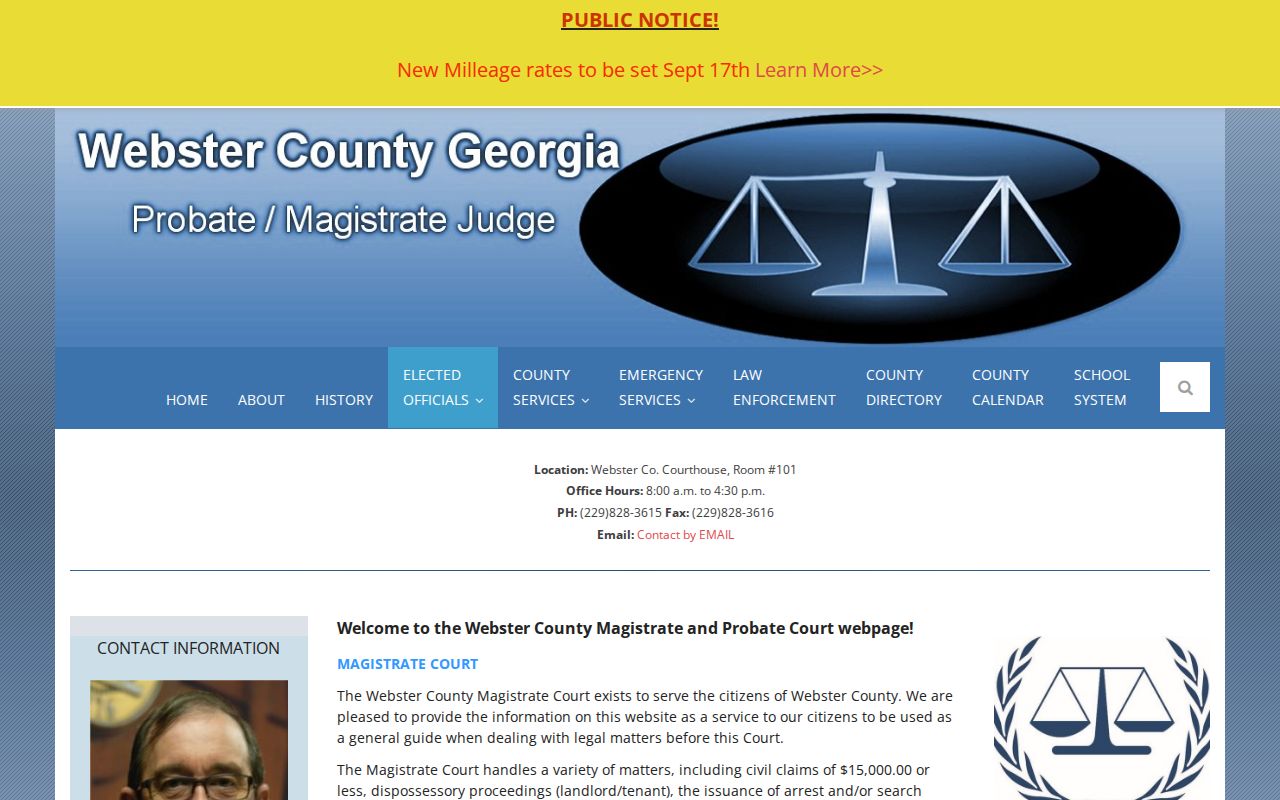
Issuance is judicial work. That is why probable cause, hearings, and the case file all belong with the court. Status and service questions start with the Webster County sheriff.
Local point: Webster Magistrate Court expressly issues arrest warrants; the sheriff carries out service and does not replace the issuing judge.
Inside a Webster County Arrest Warrant
What's actually inside a Webster County warrant file? The Georgia Judicial Branch retention schedule says arrest and search-warrant files hold applications, sworn affidavits, law-enforcement reports or supplemental evidence, and audio or video. An affidavit is a sworn statement supporting the request. Some parts stay closed, though, during an active investigation or under a sealing order.
| Subject identifiers | Name and other details used to identify the person named. |
|---|---|
| Issuing authority | The court and judicial officer responsible for the process. |
| Alleged offense | The charge or legal basis stated in the record. |
| Supporting material | Application, affidavit, report, or other evidence when retained and releasable. |
| Service or return | What occurred after law enforcement received the process. |
| Case status | Later docket activity that may affect how an older warrant should be read. |
Any public Webster County copy may come redacted. A name match alone proves little; check date of birth and the court or case number too.
Webster County Arrest Warrant File Path
A warrant file can move between custodians. The judicial retention schedule excludes some original arrest warrants once a defendant is bound over. The clerk automation binder also addresses executed warrants filed when no indictment or accusation exists. That paper may sit in several Webster County offices.
The practical path is: application and supporting proof → judicial issuance → sheriff service or attempted service → return or executed-warrant filing → related criminal docket. One office may hold service material while another holds the court file. A bounded request should therefore ask each custodian to identify the records it maintains.
No sheriff roster ends the search. A Webster County arrest warrant record may move on. Later files can sit in Magistrate Court or a Superior Court criminal docket, subject to access rules.
Serving Arrest Warrants in Webster County
The county sheriff page lists service of warrants and court orders among Webster County sheriff duties. Its official description spells out that function.
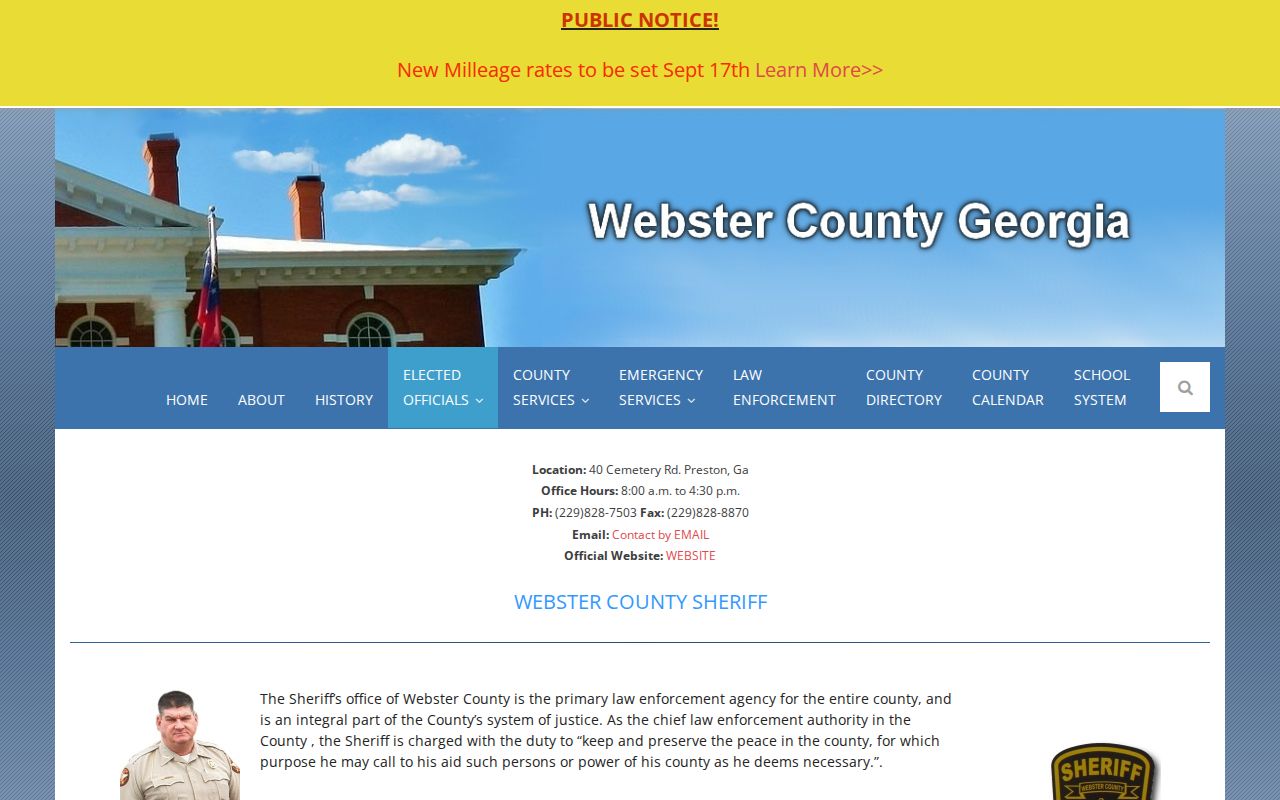
Courts issue the paper. The Webster County sheriff serves it, sometimes during direct contact and sometimes in another lawful encounter. No surrender appointments, immunity promises, or service schedules are published. The sheriff contact page lists office hours and sends after-hours emergencies to 911. A call is fine for procedure questions. It does not stop service, and staff may require in-person ID before releasing any status.
Webster County Arrest Warrant Roles
Mixed-up roles send questions to the wrong desk. Webster County's court controls issuance and later judicial action, while the sheriff serves process and may hold service records. The clerk manages filings within the docket.
| Question | Start here | Reason |
|---|---|---|
| Is a warrant currently active? | Sheriff warrant line | Georgia’s public guidance starts with the county sheriff. |
| Who issued it? | Sheriff, then named court | The process should identify the issuing authority. |
| Can it be recalled? | Issuing court or lawyer | Recall is a judicial action. |
| Is there a return or docket filing? | Court clerk and sheriff custodian | Each may hold a different file component. |
Webster County posts no public arrest-warrant portal. A direct inquiry isn't a workaround; it is the official route here.
Comparing Arrest, Summons, and Bench Warrants
An arrest warrant authorizes custody. The court's probable-cause finding comes first. A summons just directs an appearance. No custody command comes with it. A bench warrant or order for arrest typically follows a missed court duty in an existing case. Georgia traffic citations carry appearance and summons concepts, but a citation is not automatically a warrant in Webster County.
| Process | Core purpose | Reader’s next check |
|---|---|---|
| Arrest warrant | Authorize arrest on judicial process | Confirm identity, court, status, and bond route |
| Summons or citation | Direct appearance or response | Read the date and court instructions |
| Bench warrant | Return an existing matter to court | Ask the issuing court about recall and appearance |
Federal Rule of Criminal Procedure 4 compares warrants and summons. It is federal, though, and a Webster County case still runs on the correct Georgia court and case record.
Requesting Webster County Arrest Warrant Records
Use the Webster Sheriff open-records form for a defined record. It is not a live warrant dashboard. List the document type and case number. Add the incident date, range, or location. Ask for what the sheriff actually keeps: warrant, service or return record, related incident report, and disposition. That's Webster County's route under the Georgia Open Records Act.
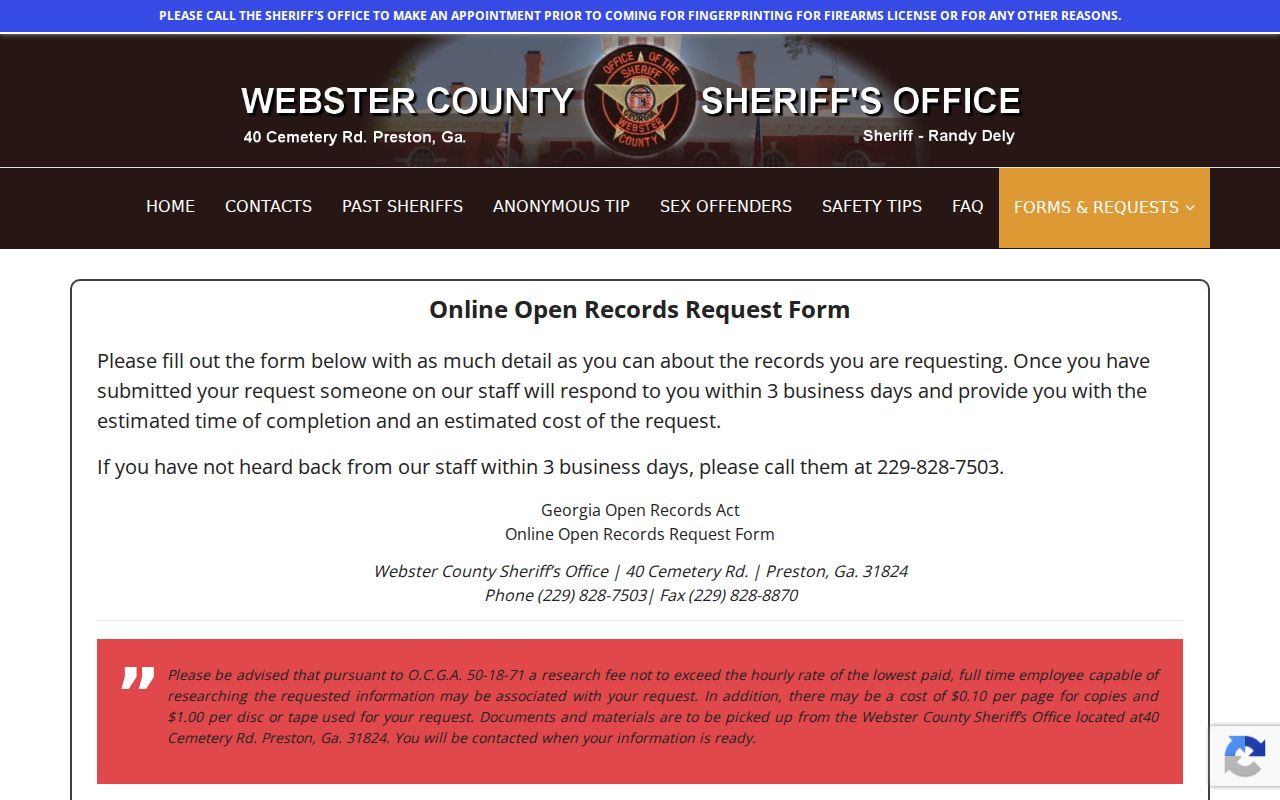
The form serves history, not instant status. The sheriff answers within three business days. The reply includes estimated completion time and cost. Georgia law does not force an agency to build a new compilation it never kept.
- Ask for a narrow date range.
- State whether a current or historical record is sought.
- Request an estimate before costly research begins.
- Ask for the proper custodian if the court holds the file.
If There's an Arrest Warrant for You
Don't walk into a Webster County office cold. You could be taken into custody on the spot. Georgia's official warrant guidance tells you to call the sheriff with a name and date of birth, and ask if they'll disclose by phone or require you to come in. The published Webster County warrant line is (229) 828-7503.
- Confirm the identity match, issuing court, case number, and current status.
- Ask whether the alleged offense is bondable and whether a bond amount or hearing is set.
- Contact a criminal-defense lawyer before surrender if legal or custody questions remain.
- Ask the sheriff about booking logistics and the court about the first appearance.
- Keep copies of receipts, bond papers, and later docket entries.
Act carefully: A status inquiry can lead to arrest if a warrant is active; no Webster source promises a protected walk-in or safe-surrender process.
Bond is possible after booking, or within 72 hours. It depends on the charges. The Webster County sheriff's FAQ posts no full schedule, and Georgia law restricts bond for certain offenses, so the actual charge and the judicial order control.
Webster County Arrest Warrant Access
Some records simply are not open. Juvenile files, sealed cases, protected identifiers, and pending investigative material all follow different access rules in Georgia. The Attorney General's juvenile-record summary cites O.C.G.A. § 15-11-708, and the restricted JDEX system carries statutory confidentiality warnings. Even adult Webster County warrant records are not open without redaction in every case.
- Affidavit
- A sworn statement supporting a warrant request.
- Return
- The record of service, attempted service, or other action on process.
- Sealed
- Restricted from ordinary public access by law or court order.
- Probable cause
- The legal basis evaluated by the issuing judicial officer, not a finding of guilt.
Ask the Webster County custodian to cite the basis for any withholding. A partial response does not prove the warrant never existed.